6 classroom seashell crafts for teachers
Ready to turn ordinary seashells into classroom magic? These six DIY ideas are short on fuss but big on wow, perfect for anyone who loves hands-on projects that kids can help with. Trust me, your students will be obsessed with the tiny ocean vibes in every corner of the room.
1. Coastal Carousel Desk Organizer
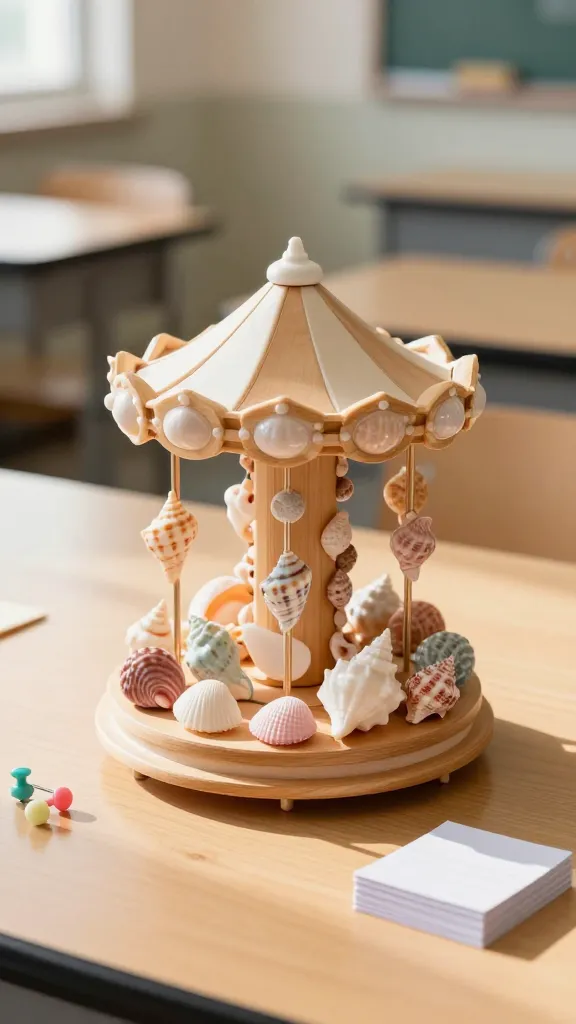
Picture a sunny, tide-bright desk that doubles as a classroom charm. This seashell carousel keeps pens, pencils, and tiny labels in easy reach while adding a beachy glow to your student stations. It’s quirky, functional, and surprisingly sturdy for daily use.
Materials Needed
- Small to medium seashells (assorted shapes and colors)
- Plain wooden or cork base (round or square)
- Hot glue gun and glue sticks
- Mini magnetic or velcro dots (optional)
- Acrylic paint and brushes (optional for base)
How to Make It
- Paint the base in a soft aqua or sandy beige—dry thoroughly.
- Arrange seashells around the edge and glue them in place, leaving space in the center for pens.
- For a playful twist, add a few shells on top as a tiny “roof” or lid to lift off for quick access.
- If you need it to be mobile, attach small felt feet and keep the shell layout loose enough for rearranging.
Pro Tips / Styling Ideas
- Group a few of these at each student table for a cohesive seashore vibe.
- Seal the shells with a matte spray to prevent chipping and keep them looking fresh.
- Pair with a mini poster about ocean habitats for extra learning value.
Who will love it: Teachers who crave practical decor with a splash of whimsy—great for tidy desks and calming corners.
2. Seashell Sentence Sculptures
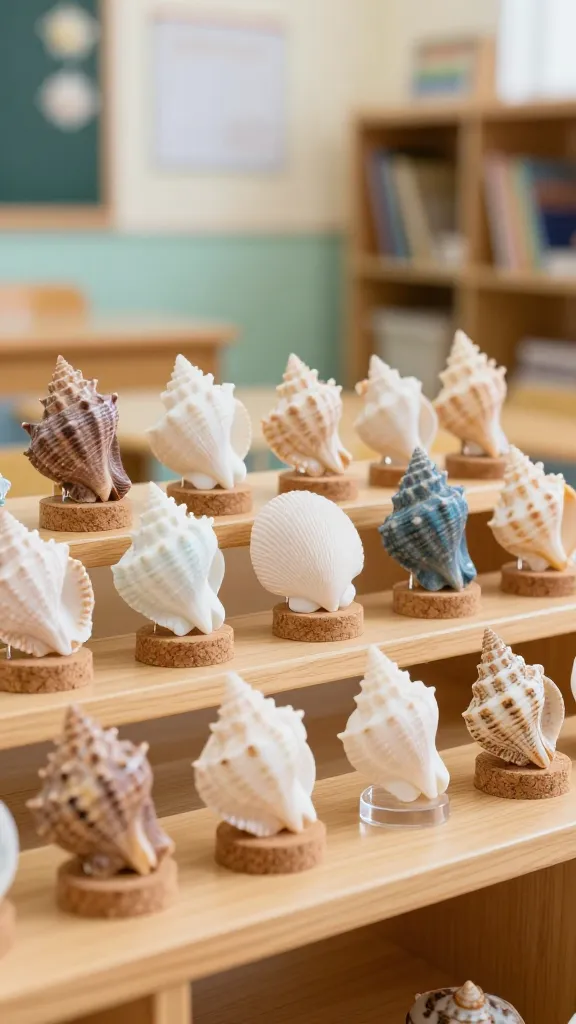
Turn shells into tiny wordy treasures that celebrate literacy. This project makes a gorgeous display piece and doubles as a quick writing prompt for students who need a little creative spark. It’s tactile, colorful, and seriously eye-catching on a classroom shelf or reading nook.
Materials Needed
- Flat-backed seashells in assorted sizes
- Fine-tip permanent markers or paint pens
- Small wooden stands or cork bases
- Clear craft glue
- Optional: mini letter stickers for extra flair
How to Make It
- Sketch a short, positive sentence on each shell—think “you can do it,” “tide’s turning,” or “book adventures await.”
- Use markers to write clearly, letting colors match the shell’s natural tones.
- Glue the shells at slight angles on the stands to create a gallery of tiny word sculptures.
Pro Tips / Styling Ideas
- Arrange in a shallow tray of sand for a mini coastal display on your reading table.
- Seal with a matte spray to prevent smudges from classroom handling.
- Mix with sea glass or driftwood for added texture.
Who will love it: Librarians and language teachers who want a tactile, shareable literacy prompt that doubles as decor.
3. Ocean-Themed Number Tiles
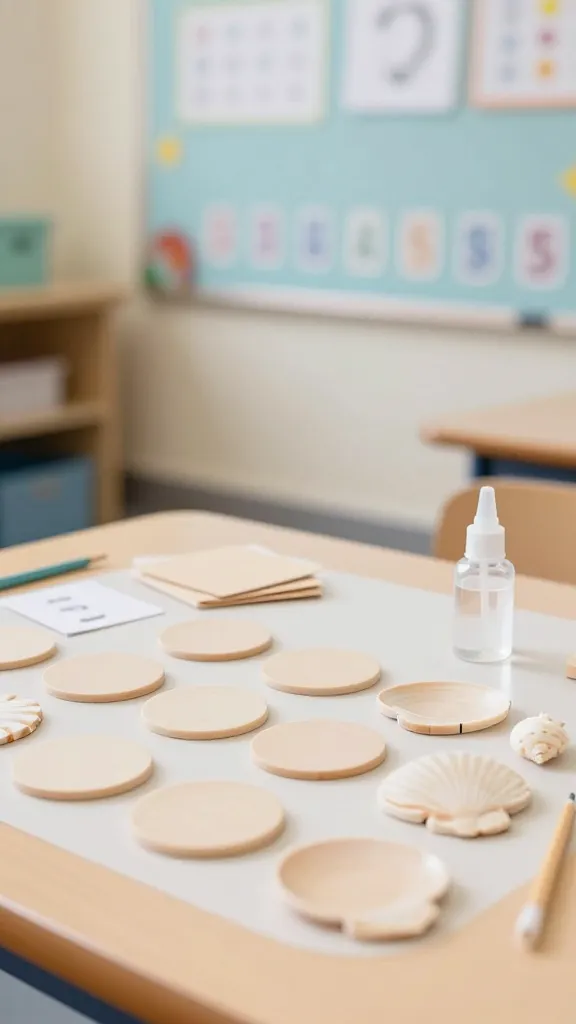
Brighten math time with numbered seashell tiles that students can rearrange during counting, skip counting, or math centers. The shells’ natural textures add a tactile dimension that helps with memory—plus they look incredibly charming on a math board or number line.
Materials Needed
- Assorted seashells, preferably flat and sturdy
- Cardstock or lightweight wood for backing
- Permanent markers or acrylic paint pens
- Clear sealant (optional)
How to Make It
- Attach a small backing to each shell so you can write numbers clearly.
- Number 0–9 (or 1–20 for older classes) on each shell, using bright colors for visibility.
- Lay them out on a shallow tray or magnetic board for easy reconfiguration.
Pro Tips / Styling Ideas
- Turn some shells into “answer keys” for quick checks during practice sessions.
- Add tiny emoji stickers for a playful vibe that engages younger learners.
- Use different textures to cue different number skills (bare shells for counting, painted ones for fractions).
Who will love it: Math enthusiasts and classroom helpers who want a flexible, reusable setup for number sense play.
4. Seashell Photo Callouts
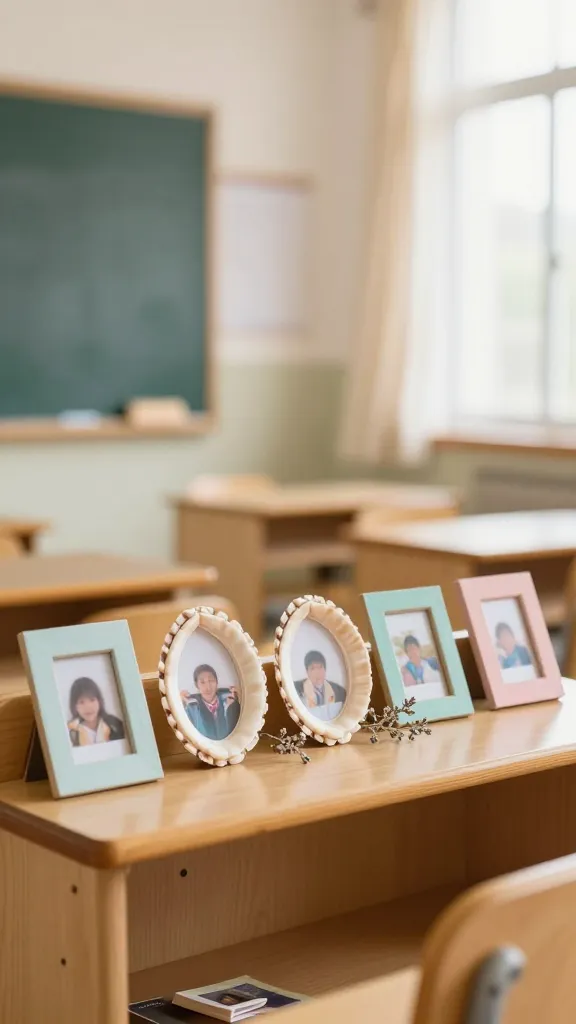
Capture classroom memories with framed seashell callouts featuring student photos or illustrations. This project doubles as a personal gallery and a keepsake display that travels from start-of-year to year-end, reminding everyone of progress and friendship. It’s simple, heartfelt, and seriously charming.
Materials Needed
- Small seashells with flat surfaces
- Mini photo frames or cardboard frame cutouts
- Printed student photos or class illustrations
- Double-sided tape or small glue dots
- Optional: alphabet stickers for captions
How to Make It
- Print 2×3 or 3×4 inch student photos on sturdy paper.
- Glue or tape a photo to the back of each shell, letting the shell’s curve create a charming tilt.
- Display on a corkboard or a shallow tray labeled with “Our Seashell Stories.”
Pro Tips / Styling Ideas
- Rotate photos monthly to celebrate small wins and milestones.
- Use shells to separate grades or reading groups for a curated feel.
- Add printed captions like “First Reader” or “Math Master” for extra personalization.
Who will love it: School photographers, homeroom teachers, and anyone who believes memories belong on display.
5. Mini Seashell Wind Chimes
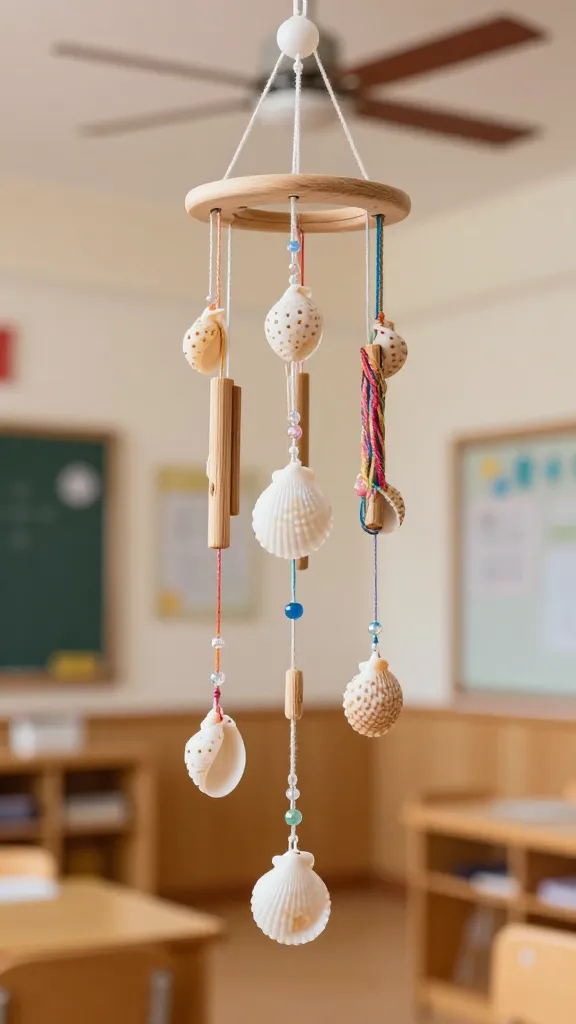
Bring a gentle soundtrack to your classroom with mini seashell wind chimes. Each chime becomes a tiny art piece that sways with the breeze from the ceiling fan or a gentle doorway draft. It’s soothing, decorative, and easily made with kid-friendly materials.
Materials Needed
- Clean seashells with small holes or drill-friendly holes
- Colorful embroidery floss or thin twine
- Short wooden dowels or driftwood pieces
- Beads (optional) for extra sparkle
- Glue (hot glue or strong craft glue)
How to Make It
- String a shell onto a length of twine, adding a bead for a pops of color if desired.
- Attach multiple strands to a small wooden dowel or driftwood piece to create a wind chime array.
- Hide the string ends with a tiny knot and secure everything with glue.
Pro Tips / Styling Ideas
- Hang near reading corners for a calming effect that signals “soft reading time.”
- Use shell colors to match seasonal themes (turquoise for spring, coral for fall).
- Keep strands short for younger classrooms to avoid tangling.
Who will love it: Artsy teachers and students who appreciate a sensory, decorative project that doubles as a classroom soundtrack.
6. Seashell Creative Writing Prompts Jar
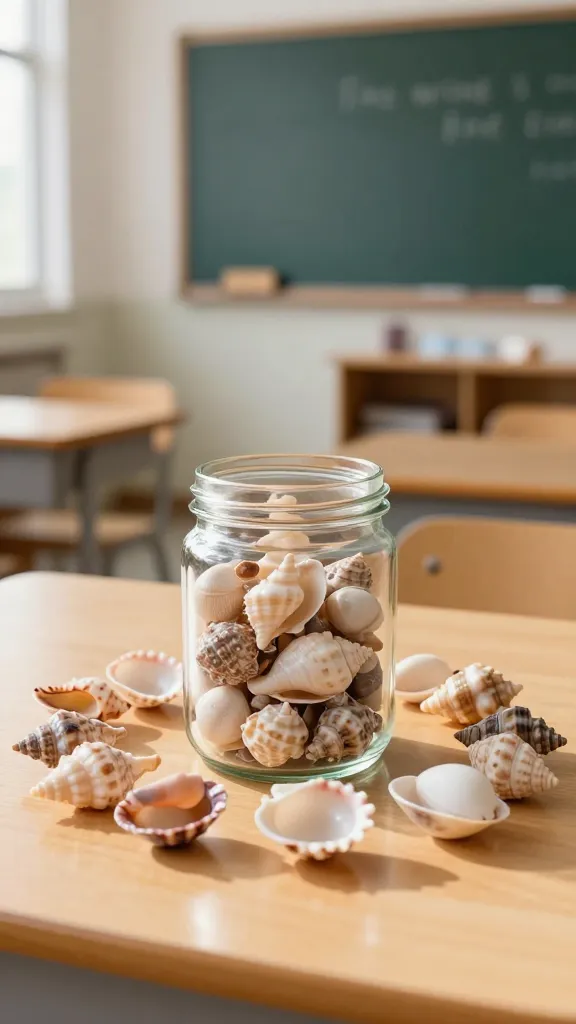
Turn shells into a creative writing station that sparks imagination. A seashell prompt jar gives students a quick, tactile start to writing, with each shell offering a unique prompt you’ve pre-written in fun, age-appropriate language. It’s easy to reset and endlessly reusable—FYI, kids love choosing a shell and spinning a story from its tiny secrets.
Materials Needed
- Assorted seashells (flat or curved) with enough surface to write on
- Permanent markers or paint pens
- Small glass or plastic jar with lid
- Label stickers or tag for the jar
- Optional: mini pencils or chalk sticks for writing outlines
How to Make It
- Write a unique, short writing prompt on each shell—think fantasy twists, mystery starters, or observational prompts.
- Drop all shells into the jar and seal it with a lid lid that’s easy for little hands to open.
- During writing time, students pull a shell and craft a story inspired by the prompt.
Pro Tips / Styling Ideas
- Color-code prompts by genre or skill level to streamline grouping.
- Keep a “shell story” board where students post a single-sentence summary of their work.
- Replace prompts monthly to keep the activity fresh and exciting.
Who will love it: Eager storytellers, reluctant writers, and classrooms that want a quick, low-prep writing jumpstart.
Conclusion
These six classroom seashell crafts for teachers are more than pretty accents—they’re creative anchors for learning, community, and a little coastal whimsy. Pick one (or all six) to refresh your space and inspire your students to dive into hands-on, joyful projects. Seriously, you’ll love the way they transform the room—and the memories they help create.